Home
About
Products
Solution
Food and Beverage
Beer Filtration Application
Water Filtration
Wine filtration
Life Sciences
Plasma Separation and Filtration
Eye Drop Filtration Scheme
Small Volume Injection(SVP)
Large Volume Injection Process (LVP)
Culture Medium
Water Treatment
Public System Water Use
Technology
Technical Service
Download Materials
Blog
Company News
Industry News
Project Dynamics
Contact Us
Language
中文
English
Russian
News Information
2025-07-07
New Product Release
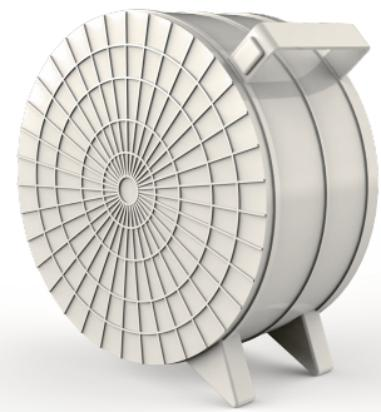
Each filtration module in a disposable deep filtration membrane pack is composed of two completely independent layers of filtration materials, usually with the upper layer of filtration material having a more open filtration aperture than the lower layer. This composite structure design improves the pollutant holding capacity of each filtration unit, avoids premature clogging of the filter, and effectively extends the load capacity of the membrane pack.
At present, among the common drug virus removal methods, virus removal filtration technology can be used as an effective physical step to remove viruses. Due to its simple and mild operation, clear mechanism, and easy verification, it has been widely used for virus safety assurance in purification processes. The currently widely used virus removal filter has a retention aperture of 20nm, which achieves virus retention through a size exclusion mechanism. Its mechanism of action is based on the fact that the virus is larger than the filter membrane aperture, and the product passes through the filter membrane while the virus is retained, which can remove enveloped or non enveloped viruses. At the same time, based on the molecular size retention mechanism, the 20nm retention aperture of the virus removal filter membrane can not only effectively remove small viruses, but also effectively remove mouse leukemia viruses with a diameter of 80-100nm and other types of virus particles.
2024-09-09
Instruction Manual for "HeXin" Microporous Membrane Bacterial Filter
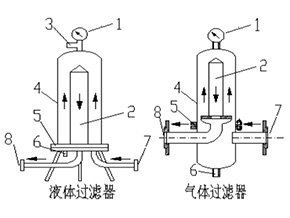
“Hexin” membranes and filters are currently popular microporous filtration devices internationally. They are equipped with composite folded microporous membrane filter cartridges, which achieve a certain particle filtration effect through microporous screening on the membrane surface. They have advantages such as high filtration precision, good filtrate quality, small filter volume, large flow rate, simple operation, and low production cost. The main materials meet the biosecurity requirements of Grade 6 in the 22nd edition of the United States Pharmacopeia and comply with Chinese standards GB9688-88 and GB/T-17219-1998.
2024-12-23
Rapid wetting method for hydrophilic filter cartridges
Install the new filter cartridge into the filter housing and fill it with pure water.
2024-12-20
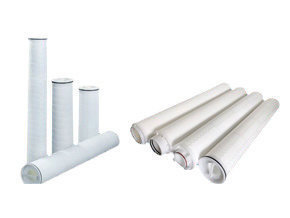
Introduction to Microporous Pleated Filter Cartridges
Microporous membranes are thin films with a porous structure, with pore sizes generally ranging from 0.025 to 10 μm. They are usually made of polymeric materials such as cellulose esters, polysulfone, polyvinylidene fluoride (PVDF), etc. These materials are processed through phase inversion, stretching, and other methods to form membranes with uniform micropores. For example, cellulose ester microporous membranes have good hydrophilicity and are effective in filtering aqueous solutions; while PVDF microporous membranes have excellent chemical stability and corrosion resistance, suitable for filtering various chemical solutions.
Introduction to Deep Membrane Stacks
A depth membrane stack is a filtration unit composed of multiple layers of membrane materials with different functions. These membrane materials have different pore sizes and properties, typically including microfiltration membranes and ultrafiltration membranes, forming a multi-layered, depth filtration structure. For example, it may include a layer of coarser pre-filtration membrane to intercept larger particles, followed by several layers of membranes with progressively smaller pore sizes to remove finer impurities.