
New Product Release
Published Time:
2025-07-07
At present, among the common drug virus removal methods, virus removal filtration technology can be used as an effective physical step to remove viruses. Due to its simple and mild operation, clear mechanism, and easy verification, it has been widely used for virus safety assurance in purification processes. The currently widely used virus removal filter has a retention aperture of 20nm, which achieves virus retention through a size exclusion mechanism. Its mechanism of action is based on the fact that the virus is larger than the filter membrane aperture, and the product passes through the filter membrane while the virus is retained, which can remove enveloped or non enveloped viruses. At the same time, based on the molecular size retention mechanism, the 20nm retention aperture of the virus removal filter membrane can not only effectively remove small viruses, but also effectively remove mouse leukemia viruses with a diameter of 80-100nm and other types of virus particles.
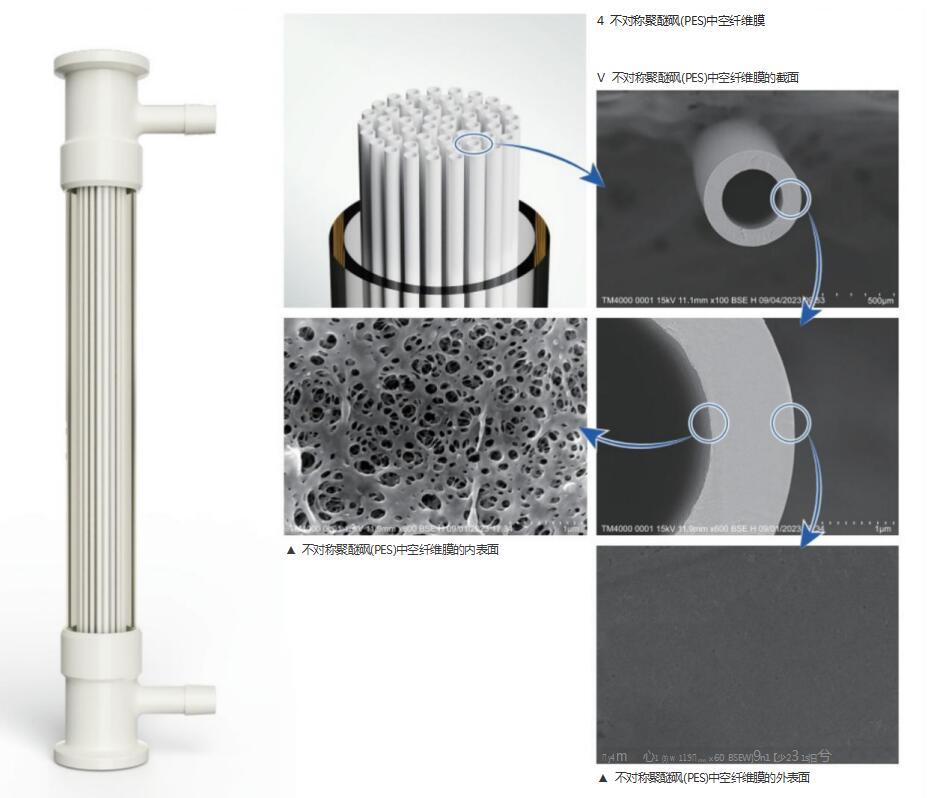
The VF virus removal filter combines the highest virus safety and excellent membrane loading to design a virus filter that is more suitable for one-time use and has high throughput. The design of hollow fibers, without the need for additional fixtures, occupies a small area and is a ready to use product with low flushing volume and pre sterilization,
| Product Features | Typical Applications |
|
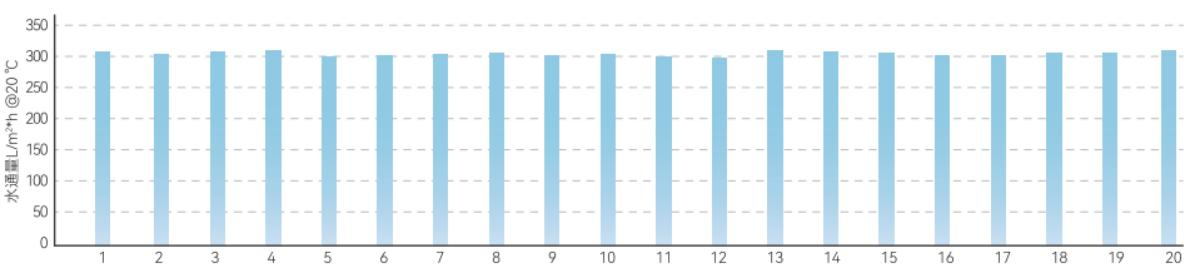
o Hollow fiber design) Low dead volume, small footprint ◎ Small rinse volume, high recovery rate ◎ Single-use, no cleaning validation required ◎ Pre-sterilized packaging, ready to use High throughput, 300 LMH@2 bar ◎ Water-based integrity testing ◎ Maximum pressure resistance 5 bar ◎ 100% integrity testing before leaving the factory o Robust virus removal capability |
◎ Monoclonal antibody o Bispecific antibody ◎ Fc fusion protein o Nanobody ◎ Recombinant COVID-19 vaccine ◎ Small molecule recombinant protein (<180 kD), etc. |
Membrane Material Characteristics
The VF virus removal filter uses an asymmetric polyethersulfone (PES) hollow fiber membrane with a nominal pore size of 20 nm. The pore size distribution of this membrane is funnel-shaped, so the membrane can maintain high throughput while ensuring the retention of small viruses under challenging conditions without affecting the filtration of the target protein.
Patented Modification Technology
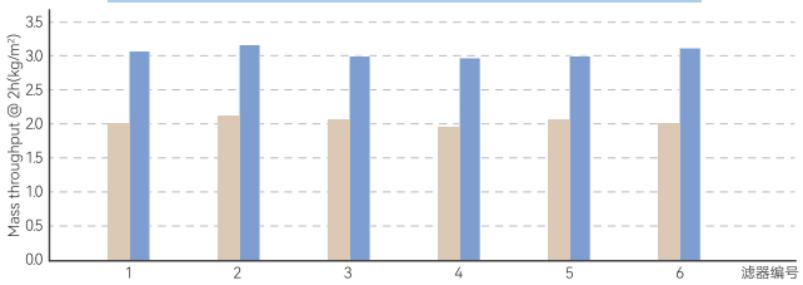
We have also specially modified the membrane surface of the VF virus removal filter using patented modification technology to reduce the adsorption of proteins, polymers, or other potential contaminants, thereby achieving a higher level of loading.
Loading Level of VF Virus Removal Filter
Water Flux Test of VF Virus Removal Filter
Retention Level of PPV in |gG
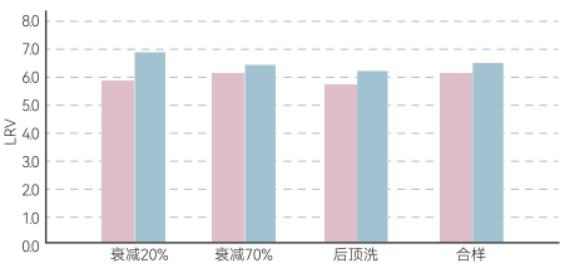
Retention Level of PP7 under Different Clogging Conditions
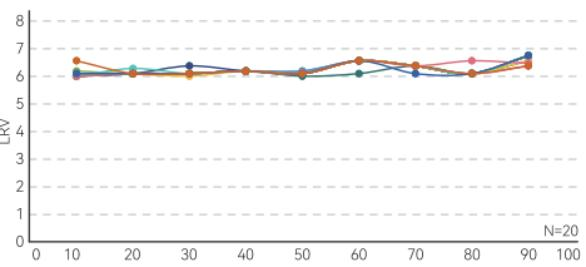
Retention Level of PP7 under Different Pressures
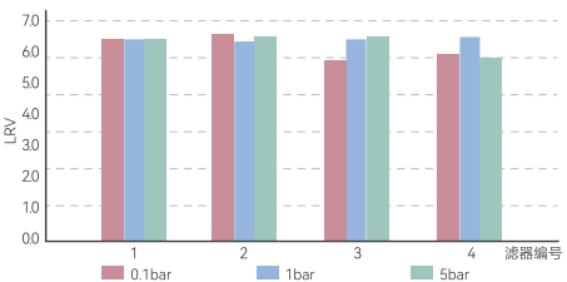
Retention Level of PP7
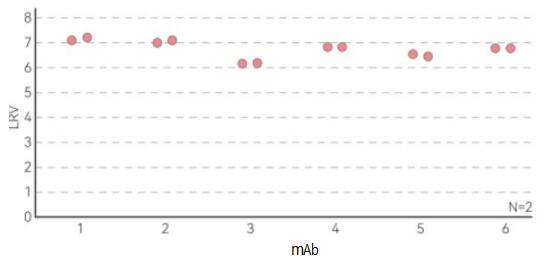
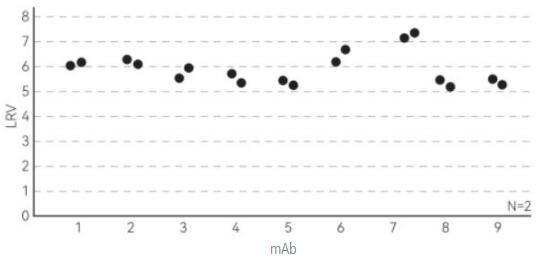
Retention Level of MuLV
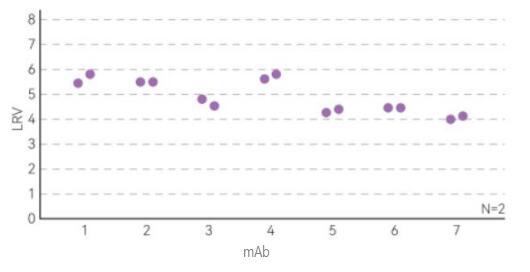
Retention Level of MVM
| Product Parameters Product Model | VF-S | VF-U | VF-M | VF-P | ||
| Filtration Area | 0.0005 m2 | 0.02 m2 | 1 | 2 | 2 m2 | |
| Applicable Scale | Process Development | Scale-up Studies | Production Scale | Production Scale | ||
|
Filter Material |
Membrane Material | Polyethersulfone | ||||
| Housing, End Caps | Polysulfone | |||||
| Sealing Glue | Polyurethane | |||||
| Cutoff Pore Size | 20 nm | |||||
| Integrity Test | Air diffusion flow, water wetting | |||||
| Maximum Operating Pressure | 5 bar | |||||
| Maximum Tolerable Temperature | 40 ℃ | |||||
| PH Range | 4 ~ 9 | |||||
|
Interface |
Inlet, Outlet | Luer connector | TC3/4" sanitary fitting | TC1.5" sanitary fitting | TC2" sanitary fitting | |
| Outlet | Luer connector | 1/4" Pagoda connector | TC1/2" sanitary fitting | TC1" sanitary fitting | ||
| Recommended Processing Volume | < 0.5 | < 50 | > 50 | > 50 | ||
| Sterilization Method | Gamma irradiation | |||||
| Bacteriophage Retention | Minimum challenge level for PP7 bacteriophage 107 pfu/mL, LRV 4 | |||||
| TOC/Conductivity/PH @ 25℃ | Rinse volume reaches 10 L/m2 or more, filtrate conductivity < 1.3 μS/Cm, TOC < 500 ppb, PH range 5.0 ~ 7.0 | |||||
| Bacterial Endotoxins |
According to the 2020 edition of the Chinese Pharmacopoeia, Part IV, General 1143 Bacterial Endotoxin Test (same as USP <85>) gel method test, Eluate bacterial endotoxin content < 0.25 EU/mL |
|||||
| USP <87> In vitro biocompatibility | USP <87> MEM elution test showed no potential cytotoxicity | |||||
| USP <88> In vivo biocompatibility | Complies with the current USP <88> Class V plastic reaction test standard (70℃ extraction) | |||||
| No animal origin | The product does not contain animal-derived components and has no risk of transmissible spongiform encephalopathy (TSE) | |||||
| Quality Assurance | The R&D and production of the product are carried out under the ISo6 9001:2015 quality management system | |||||
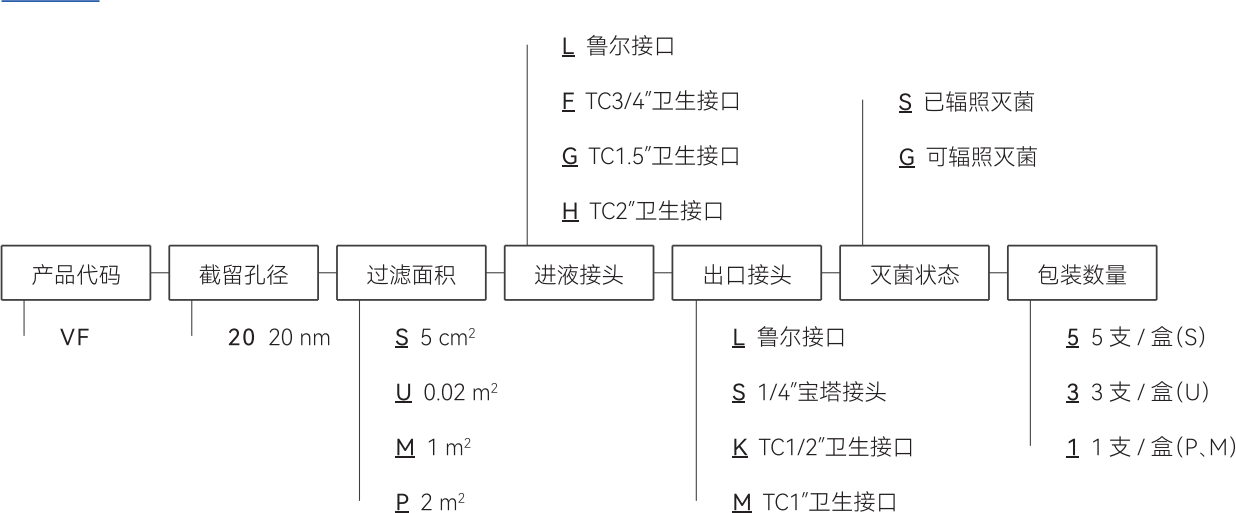
Ordering Information
New Product Release
Instruction Manual for "HeXin" Microporous Membrane Bacterial Filter
Related News
The Essential Guide to Understanding Filter Cartridges in Industrial Applications
In the realm of industrial equipment, filter cartridges play a crucial role in maintaining operational efficiency and ensuring product quality. These components are designed to trap contaminants, preventing them from entering machinery and processes. Understanding the types, applications, and maintenance of filter cartridges is essential for professionals looking to optimize filtration systems. Fi
Choosing Between Single-use and Reusable Microporous Filter Cartridges: A Comprehensive Guide
Choosing Between Single-use and Reusable Microporous Filter Cartridges: A Comprehensive Guide Table of Contents Introduction Understanding Microporous Filter Cartridges Single-use Filter Cartridges Advantages of Single-use Filter Cartridges Disadvantages of Single-use Filter Cartridges Reusable Filter Cartridges Advant
Understanding Depth Filters: A Comprehensive Guide for Industry Professionals
Depth filters play a crucial role in various industrial applications, particularly in the filtration of liquids and gases. Unlike surface filters, which capture contaminants on the surface, depth filters are designed to trap particles throughout their thickness, allowing for a more efficient filtration process. This unique characteristic makes them particularly effective for removing larger volume
Key Differences Between Membrane and Depth Syringe Filters Explained: A Comprehensive Guide
Key Differences Between Membrane and Depth Syringe Filters Explained Understanding the Basics of Filtration Filtration is a crucial process in various industries, including pharmaceuticals, biotechnology, and food processing. The choice of filter type significantly impacts the quality and efficiency of filtration processes. Among the many filtration options available, membrane and depth syringe fi
Understanding SS Filter Cartridges: Essential Insights for Industrial Filtration
SS filter cartridges, or stainless steel filter cartridges, play a crucial role in various industrial applications where effective filtration is necessary. These cartridges are designed to remove impurities from fluids and gases, ensuring the quality and reliability of processes in industries such as food and beverage, pharmaceuticals, chemicals, and water treatment. One of the primary advantages
Stainless Steel Filters: The Ultimate Investment for Your Industrial Filtration Solutions
Stainless Steel Filters: An Investment in Your Industrial Filtration Needs Introduction to Industrial Filtration and the Importance of Filters In the realm of industrial processes, filtration plays a critical role in maintaining the purity and quality of liquids and gases. Stainless steel filters stand out as one of the most effective solutions for achieving high levels of filtration efficiency. T

Cooperate with us immediately
We focus on filtering the market, with a strict quality system and professional management model, stably producing high-quality filtering products, allowing our customers to filter with peace of mind. If you have any questions, please leave a message to consult!
Manager Geng
Manager Hu
© Copyright - 2025 Hangzhou Hexin Technology Co., Ltd.
浙公网安备33010602014027号
WhatsApp:8613858564135
WhatsApp:8619564072084
Email:service@hz-hx.cn
Email:valisanatalia373@gmail.com
Email:seller@hz-hx.cn